Technologies and interference management

Digital coordination for integrated and conflict-free design

The increasing complexity of contemporary building projects, characterized by the integration of different disciplines—architecture, structures, technological systems, and sustainability systems—makes the issue of interference management increasingly central. In this context, advanced digital technologies are essential tools for coordinating information flows, anticipating design conflicts, and avoiding costly errors during implementation.

A structured approach to detecting and managing interferences not only prevents technical issues but also optimizes time, reduces costs, and ensures high standards of quality and safety. It is a strategic phase of detailed executive design, where the precision of the documents must translate into constructive efficiency and management sustainability.
What is meant by interferences in construction

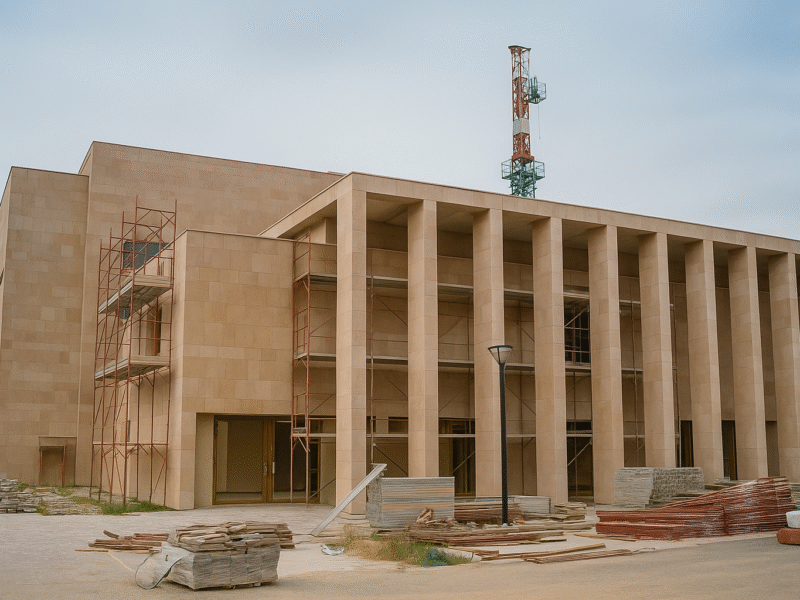
Interferences, often referred to by the English term clash detection, are overlaps or conflicts between design elements belonging to different disciplines. Some typical examples are:

  • Overlaps between structural elements and plant ductwork.
  • Conflicts between pipe routes and spaces intended for other systems or architectural finishes.
  • Incompatibilities between technological systems and regulatory or dimensional constraints.
  • Incorrect placement of safety elements, such as emergency exits or fire protection devices.

Their management requires advanced modeling tools, collaborative methodologies, and iterative verification processes.

Operational phases of interference management

1. Collection and coordination of disciplinary models
  • Importing architectural, structural, and plant models into a common data environment (CDE).
  • Application of dedicated software for geometric and performance clash detection.
  • Classification of interferences based on severity (hard clash, soft clash, 4D clash).
  • Multidisciplinary workshops to share analysis results.
  • Definition of shared corrective strategies.
  • Updating disciplinary models with proposed corrections.
  • New verification to validate the removal of interferences.
  • Creation of detailed reports indicating resolved interferences.
  • Archiving decisions in collaborative platforms to ensure transparency.

Technologies supporting interference management

    1. Building Information Modeling (BIM)
  • Integrated modeling: allows representation of architecture, structures, and systems in a single digital model.
  • Automated clash detection: algorithms that identify overlaps in real-time.
  • 4D and 5D simulations: allow analysis of interferences in relation to construction times and costs.
    1. Virtual and augmented reality (VR/AR)
  • Immersive visualization of models to identify interferences not evident from a two-dimensional reading.
  • Ability to simulate construction site scenarios and validate solutions with operators.
    1. Digital Twin
  • Dynamic digital replica of the work, updated in real-time with project data and sensors.
  • Use for verifying interferences even during management and maintenance phases.
    1. Computational simulations
  • Software for hygrothermal, acoustic, and fluid dynamic analyses that highlight performance conflicts.
  • Parametric calculations that anticipate compatibility between different technological systems.

Relevant types of interferences

  • Hard clash: physical conflicts between objects (e.g., a column passing through a duct).
  • Soft clash: violations of space constraints, such as unrespected maintenance areas.
  • Workflow clash: conflicts related to the sequence of construction activities.
  • Normative clash: non-compliance with technical, fire safety, or accessibility regulations.

Benefits of interference management

  1. Reduction of construction costs
    • Resolution of issues during the design phase, avoiding changes during construction.
  2. Optimization of time
    • Prevention of blockages and delays on site.
    • Smoother operational sequences thanks to corrected models.
  3. Improvement of quality
    • Higher standards of execution precision.
    • Reduction of errors and greater reliability of the built environment.
  4. Safety
    • Elimination of conflicts that could compromise evacuation routes or protection systems.
  5. Sustainability
    • Less waste of materials and energy thanks to more accurate design.
    • Integration of plant and structural solutions oriented towards energy efficiency.

Challenges and issues

  • Management of complex data: the high amount of information requires adequate digital infrastructures.
  • Software interoperability: need for common formats (IFC, COBie) to ensure compatibility.
  • Professional training: multidisciplinary and digital skills are needed to manage complex processes.
  • Collaborative culture: overcoming sectoral logics in favor of integrated approaches.

Integration into the construction cycle

Interference management must be planned and structured at every project phase:
  • Design: clash detection and corrections in BIM models.
  • Construction: 4D simulations to verify temporal and logistical interferences.
  • Management: digital twin to monitor and prevent system conflicts during building use.

Technologies and interference management represent a fundamental pillar of detailed executive design. Through the use of advanced digital tools and collaborative processes, it is possible to anticipate criticalities, reduce risks, and ensure quality and sustainability.

In a sector characterized by high technical and regulatory complexity, investing in structured interference management means improving operational efficiency, containing costs and time, and ensuring the realization of works consistent with design expectations and community needs.

Segui i nostri profili social
Privacy Overview

This website uses cookies so that we can provide you with the best user experience possible. Cookie information is stored in your browser and performs functions such as recognising you when you return to our website and helping our team to understand which sections of the website you find most interesting and useful.