Tests

Integrated assessment of compliance, safety, and sustainability of the work

In the construction sector, the testing phase represents the culmination of the construction process, where the work is subjected to systematic checks to verify its compliance with the project, current regulations, and required quality standards. It is not merely a formal step, but a technical-scientific activity that ensures the safety, durability, and reliability of the building or infrastructure.

Testing plays a strategic role: on one hand, it protects the client by certifying that what has been built meets the set objectives; on the other, it serves as a guarantee for the community, ensuring that the works are safe, functional, and sustainable. Its importance is heightened by the increasing complexity of modern constructions, which integrate architecture, structural engineering, and plant design, along with stringent regulatory constraints in the energy and environmental fields.

Types of testing

1. Static testing
  • Verification of the safety and stability of load-bearing structures.
  • Execution of load tests on significant elements (floors, bridges, foundations).
  • Analysis of reinforcements, materials, and the correct execution of works in reinforced concrete and steel.
  • Control of the work’s compliance with the project documents and specifications.
  • Verification of the quantities realized compared to those foreseen in the metric calculations.
  • Examination of document regularity and correct application of current regulations.
  • Functional tests of electrical, mechanical, and plumbing systems.
  • Verification of compliance with safety standards (CEI, UNI, fire regulations).
  • Measurements of energy efficiency and thermal-hygrometric and acoustic comfort performance.
  • Analysis of energy performance in line with nZEB requirements.
  • Verification of emissions, water consumption, and indoor air quality.
  • Control of environmental certifications (LEED, BREEAM, ITACA Protocol).
  • Evacuation tests and fire system trials.
  • Verification of accessibility and compliance with regulations for the removal of architectural barriers.
  • Simulations of emergency scenarios to validate safety systems.

Objectives of testing

  • Confirmation of regulatory compliance: ascertain that the work complies with all laws and technical regulations.
  • Quality assurance: validate that materials, components, and workmanship conform to project specifications.
  • Safety for users and the community: ensure that the structure can be used without risks.
  • Durability assessment: verify that the work is designed and built to withstand over time.
  • Transparency and traceability: provide official documentation useful also for future maintenance interventions.

Operational procedures of testing

  1. Preparation and document analysis
    • Collection of all project documents and construction site documentation.
    • Examination of material certifications and conformity declarations of systems.
  2. Site visits and inspections
    • Visual inspections of works and finishes.
    • Surveys and measurements to verify geometric and dimensional compliance.
  3. On-site tests and trials
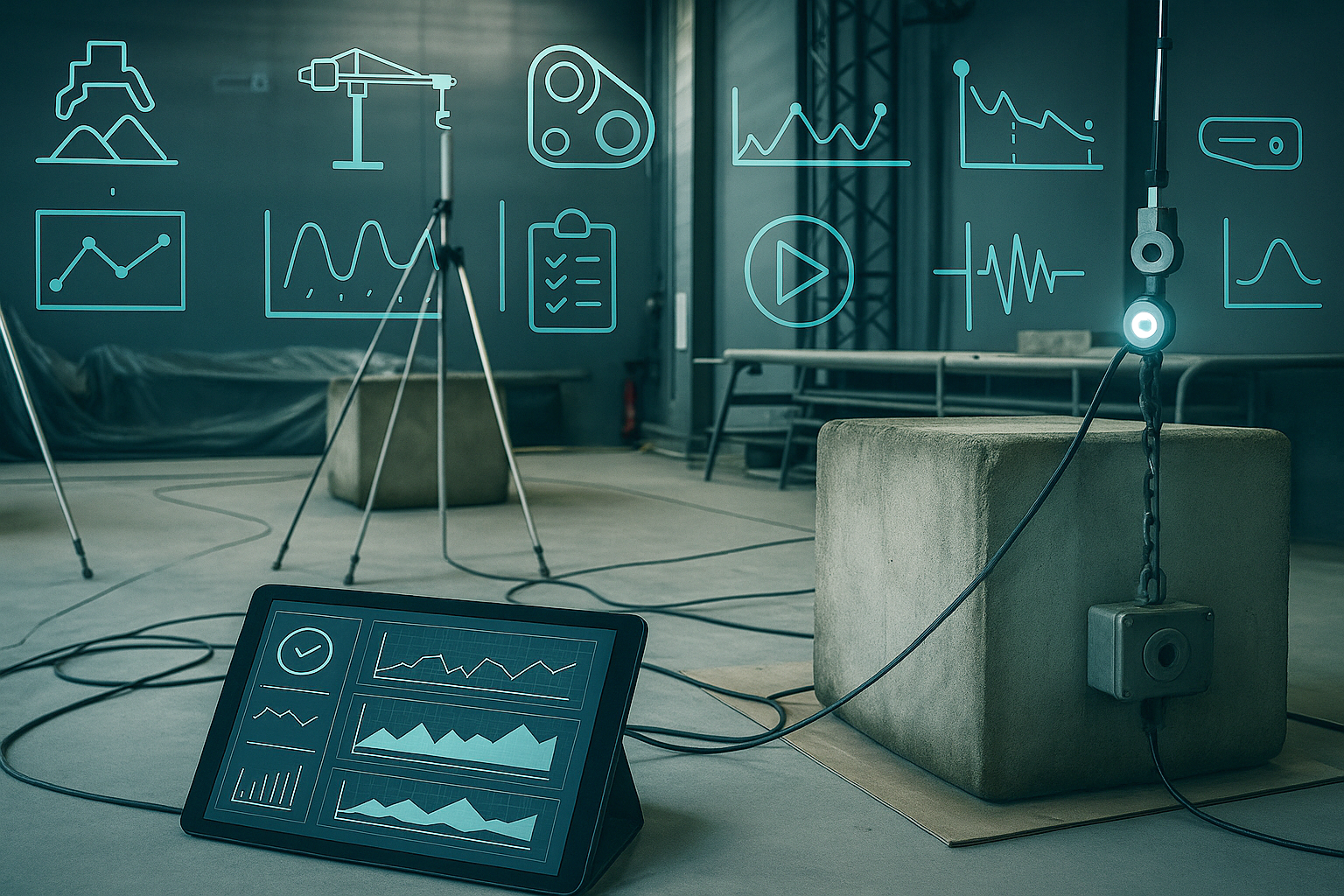
    • Static and dynamic load tests.
    • Functional testing of systems with real performance tests.
    • Non-destructive analysis to assess material integrity and quality.
  4. Drafting of the test certificate
    • Final report certifying the suitability of the work for its intended use.
    • Indication of any prescriptions or corrective interventions.
    • Issuance of the clearance for commissioning.

Tools and technologies in support

  • Building Information Modeling (BIM): use of digital models to compare the built with the designed.
  • 3D laser scanners and drones: high-precision surveys to validate geometries and volumes.
  • IoT sensors: continuous monitoring of structural and plant parameters.
  • Non-destructive testing (NDT): ultrasound, thermography, flat jacks to test structures without damaging them.
  • Digital simulations: software for verifying energy and environmental performance.

Benefits of testing

  1. Risk reduction
    • Prevention of accidents, malfunctions, or premature degradation.
  2. Economic efficiency
    • Avoid future extraordinary maintenance costs due to construction defects.
  3. Guarantee for the client
    • Greater confidence in the quality and safety of the work.
  4. Sustainability
    • Validation of environmental performance and energy consumption.
  5. Added value of the work
    • Tested and certified buildings gain greater appeal in the real estate market.

Testing should not be considered an isolated activity at the end of the work, but a part of the broader building life cycle process. The data collected during this phase become fundamental for management and scheduled maintenance, helping to ensure consistent performance over time and prolonging the durability of the work.

Testing is a decisive and essential moment in modern construction. Through accurate checks, functional tests, and document controls, it certifies the compliance, safety, and quality of the completed works.

Thanks to the use of advanced techniques and a multidisciplinary approach, testing not only ensures the immediate suitability of the work but also protects its future performance, helping to reduce management costs and increase its value over time.

Ultimately, testing represents the synthesis between design, construction, and management, acting as a bridge between realization and use, ensuring that the work fully meets the quality, safety, and sustainability standards required by contemporary society.

Segui i nostri profili social
Privacy Overview

This website uses cookies so that we can provide you with the best user experience possible. Cookie information is stored in your browser and performs functions such as recognising you when you return to our website and helping our team to understand which sections of the website you find most interesting and useful.