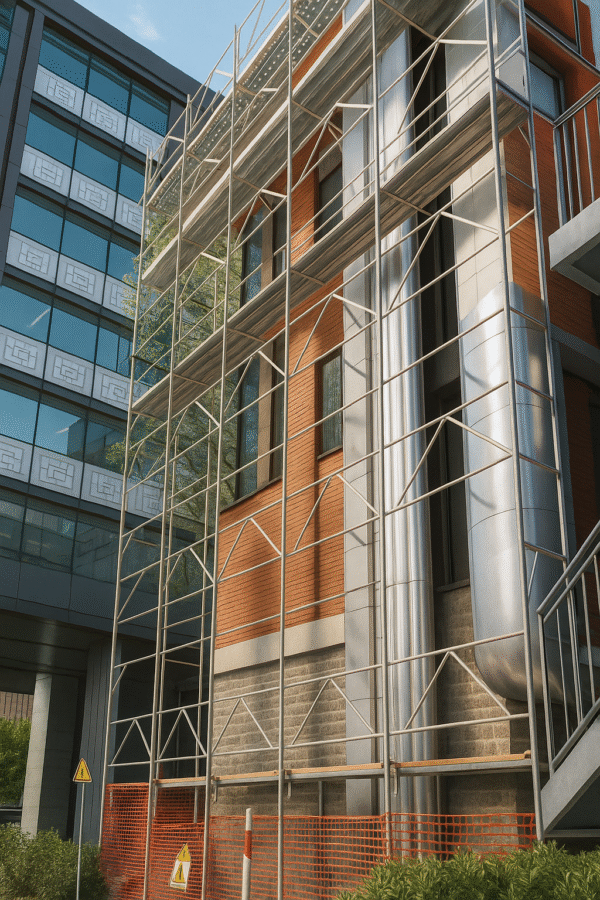
Structural and seismic design

The foundations of safety and building quality

Structural and seismic design represents one of the most significant and delicate aspects of any construction project. It not only ensures the strength and stability of buildings but also guarantees user safety, building durability, and its ability to withstand extreme events such as earthquakes. In a country like Italy, characterized by high seismic activity in many areas, proper seismic design is essential for risk prevention and the protection of the building and infrastructure heritage.

The synergy between structural and seismic design allows for buildings that not only comply with current regulations but also provide superior performance throughout their lifecycle. The modern approach is based on advanced calculation tools, innovative materials, and dynamic analysis methodologies, always aiming to combine safety, efficiency, and sustainability.

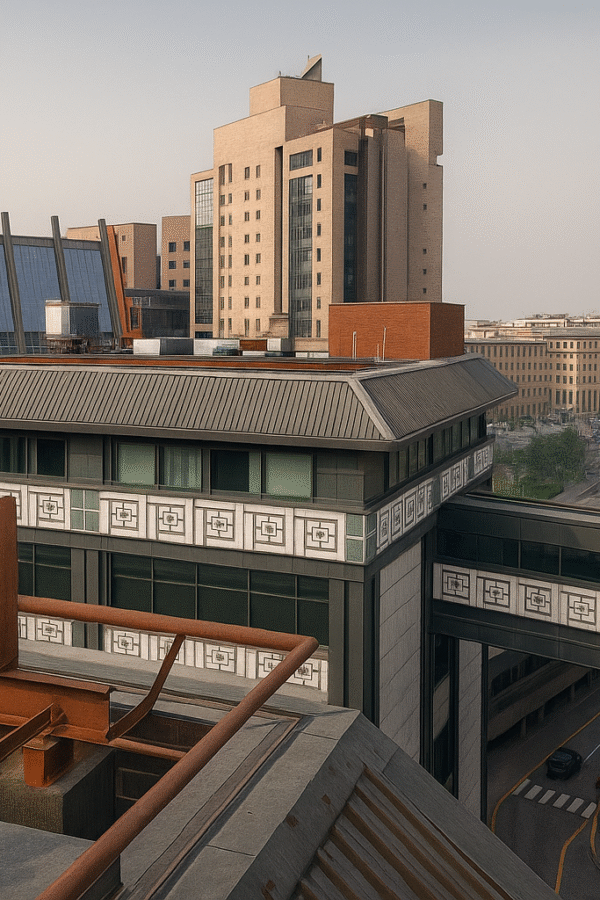
Objectives of structural and seismic design

  1. Static and dynamic safety
    • Ensure that the structure can withstand stresses from permanent, variable, and accidental loads.
    • Anticipate the structural response to seismic events, minimizing damage and safeguarding human life.
  2. Durability
    • Design structures capable of maintaining their performance throughout their lifecycle, limiting degradation and extraordinary maintenance.
  3. Economic efficiency
    • Optimize the use of materials and construction techniques to reduce costs and time without compromising safety and quality.
  4. Environmental sustainability
    • Use low-impact materials, reversible construction systems, and strategies that promote reuse and recycling.

Phases of structural and seismic design

1. Preliminary analysis
  • Geotechnical and geological study of the site: soil nature, water table, local seismic hazard.
  • Identification of soil category according to regulations (NTC 2018 in Italy).
  • Assessment of acting forces: permanent, variable loads, wind, snow, and seismic forces.
  • Creation of a mathematical model of the structure.
  • Definition of simplifying assumptions compatible with the actual conditions of the work.
  • Choice of structural type (reinforced concrete, steel, laminated wood, mixed systems).
  • Linear static analysis: evaluation of stresses due to gravitational loads.
  • Dynamic analysis: study of the structure’s response to seismic stresses, using modal analysis or response spectrum.
  • Non-linear analysis (pushover): advanced simulations to understand post-elastic behavior and energy dissipation capacity.
  • Verification of ultimate limit states (ULS): load-bearing capacity and global stability.
  • Verification of serviceability limit states (SLS): allowable deformations, vibrations, and user comfort.
  • Verification of construction details (connections, joints, reinforcements).
  • Selection of materials and construction solutions that enhance stiffness and ductility.
  • Definition of seismic joints, base isolation systems, or energy dissipators.
  • Study of structural redundancy to ensure overall behavior even in case of local damage.

Technologies and support tools

  • FEM (Finite Element Method) software: advanced numerical modeling for static and dynamic analyses.
  • BIM (Building Information Modeling): integration of architectural, structural, and plant data, with 4D and 5D simulations.
  • Structural monitoring: IoT sensors, accelerometers, and predictive diagnostic systems to evaluate real-time behavior.
  • Innovative materials: high-performance concretes, high-strength steels, carbon or basalt fiber composites for local reinforcements.

Moreover, structural and seismic design is governed by national and international standards that establish criteria, calculation methods, and minimum requirements:

  • Technical Standards for Construction (NTC 2018) in Italy.
  • Structural Eurocodes (EN 1990–1999), particularly Eurocode 8 for seismic design.
  • CNR guidelines and specific technical documents for innovative materials.

Integration with other disciplines

Structural and seismic design must be fully coordinated:

  • Architecture, to ensure coherence between form and function.
  • Plant engineering, to avoid conflicts with load-bearing elements.
  • Fire safety and accessibility, to ensure overall compliance.

A collaborative and interdisciplinary approach reduces the risk of variations and ensures a more efficient construction process.
Benefits of integrated design

  1. Increased safety
    • Reduction of the risk of structural collapses during seismic events.
    • Protection of human life and critical infrastructure.
  2. Economic optimization
    • Reduction of costs due to post-earthquake damage.
    • Increased durability with lower maintenance expenses.
  3. Sustainability and resilience
    • Structures designed to withstand extreme events and adapt to future climate scenarios.
    • Reduction of environmental impact throughout the lifecycle.
  4. Real estate value
    • Safe and compliant buildings have greater market appeal.
    • Better access to financing and incentives related to ESG criteria.

Structural and seismic design is a fundamental pillar of modern construction. It requires specialized skills, advanced tools, and an integrated approach to ensure safe, resilient, and sustainable buildings.

A well-defined structural project not only complies with current regulations but becomes an investment in the future: it reduces risks for the community, limits maintenance costs, and enhances the value of the work over time.

Ultimately, the quality of a building or infrastructure largely depends on the solidity of its engineering foundations: only accurate structural and seismic design can guarantee safety, durability, and lasting value.

Segui i nostri profili social
Privacy Overview

This website uses cookies so that we can provide you with the best user experience possible. Cookie information is stored in your browser and performs functions such as recognising you when you return to our website and helping our team to understand which sections of the website you find most interesting and useful.