
Architectural and Engineering conception of the work

Balance between aesthetics, functionality, and performance in building design

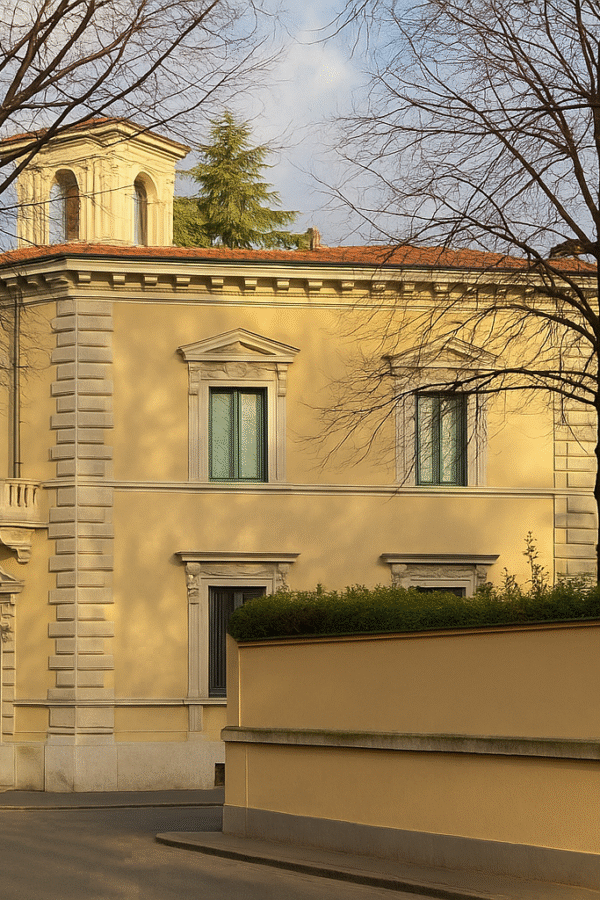
In construction, the architectural and engineering conception of the work constitutes the foundational phase of every project. It is at this moment that creative vision and technical rigor merge to create solutions that must be aesthetically pleasing, functional, safe, and sustainable. The conception is not limited to translating needs into a design concept but represents a methodical and multidisciplinary process in which strategic directions, constraints, expected performance, and integration methods between architecture, structures, and systems are defined.

A well-conceived work is one that successfully addresses three fundamental challenges simultaneously: ensuring comfort and usability for users, complying with regulatory and environmental constraints, and ensuring durability and resource optimization throughout the entire lifecycle.
Principles underlying architectural and engineering conception

  1. Interdisciplinary integration
    Architecture, structural engineering, and plant engineering must work in synergy from the earliest stages, avoiding sequential approaches that risk generating inconsistencies.
  2. Performance-based approach
    The work must be designed to ensure measurable performance in terms of energy efficiency, safety, acoustic comfort, and indoor environmental quality.
  3. Contextualization
    Every project must engage with the territorial, urban, and environmental context, respecting its geomorphological, climatic, and cultural characteristics.
  4. Sustainability and resilience
    The conception must incorporate strategies for reducing environmental impact, responsible resource use, and adaptability to changing climate scenarios.

Phases of architectural conception

Architectural conception is not an isolated creative act but a structured process:

1. Preliminary analysis

Study of the site, regulatory constraints, and client requirements.

Definition of volumes, shapes, and functions through planimetric schemes and 3D models.

Development of spatial solutions coordinated with structural and plant choices.

Use of digital tools to evaluate natural lighting, thermal comfort, acoustics, and mobility flows.

Balancing architectural identity and technical performance.
Phases of engineering conception

In parallel with architecture, engineering defines the technical and operational foundations of the project:
1. Structural engineering
  • Geotechnical and seismic analyses to define foundations and structural type.
  • Numerical modeling using FEM (Finite Element Method) to simulate behavior under static and dynamic loads.
  • Optimization of materials (steel, concrete, laminated wood, composites) for durability and sustainability.
  • Integrated design of HVAC (Heating, Ventilation, and Air Conditioning) systems.
  • Solutions for energy efficiency: heat pumps, radiant systems, integrated renewable sources.
  • Design of electrical, lighting, and special systems (security, data, automation).
  • Integration with Building Management System (BMS) for intelligent building management.

Digital tools supporting conception

Today, architectural and engineering conception is supported by advanced tools that allow for unprecedented precision and integration:
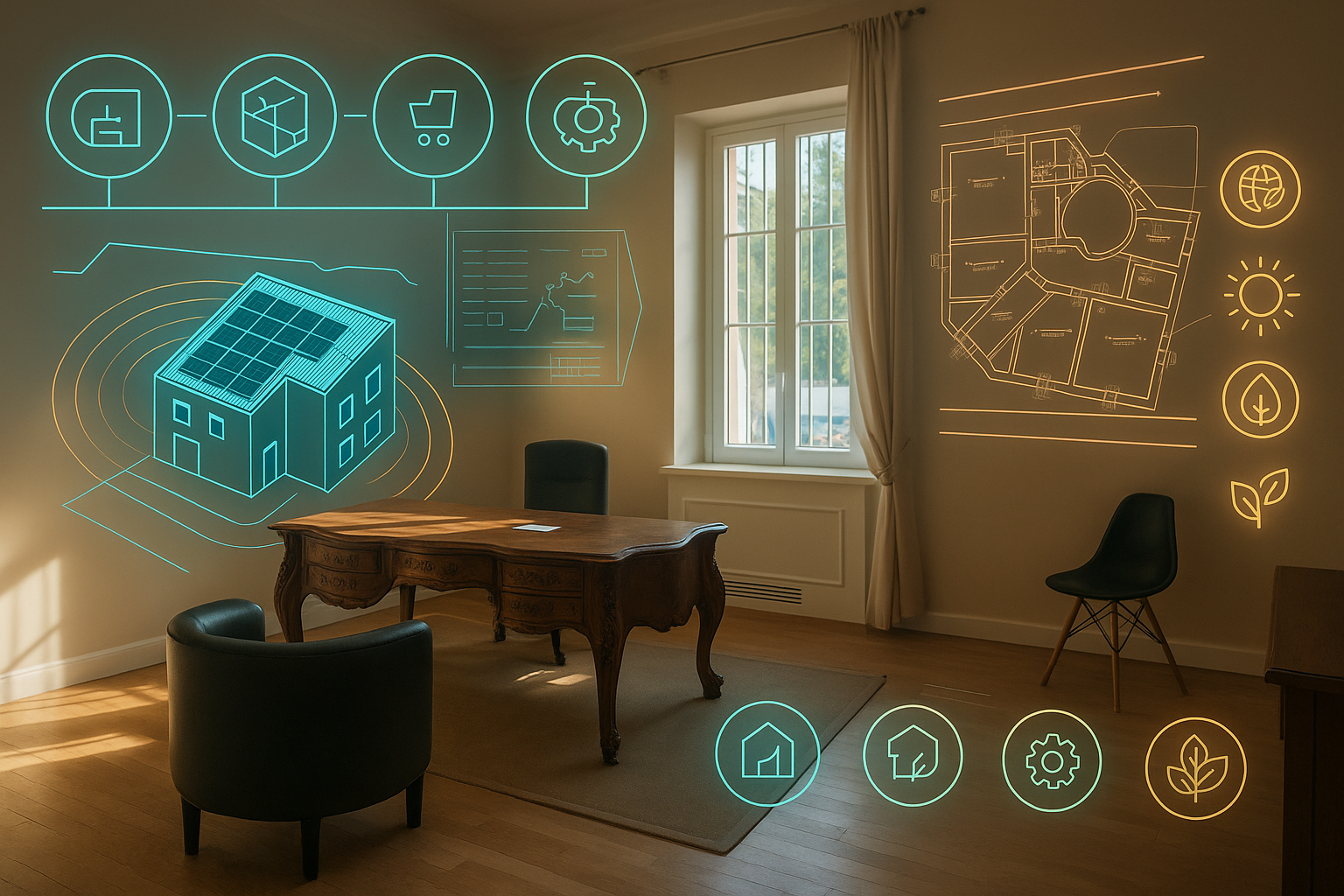
  • Building Information Modeling (BIM): collaborative platforms that manage architectural, structural, and plant data in an integrated manner.
  • Dynamic energy simulations: software that evaluates real performance under variable climatic conditions.
  • LCA (Life Cycle Assessment) and LCC (Life Cycle Costing): tools to measure environmental and economic impacts throughout the lifecycle.
  • Rendering and augmented reality: immersive visualizations that allow validation of choices with clients and stakeholders.

Benefits of integrated conception

  1. Design coherence
    • Elimination of inconsistencies between disciplines.
    • Greater fluidity in authorization processes.
  2. Economic efficiency
    • Reduction of costs arising from changes during construction.
    • Optimization of resources and materials.
  3. Sustainability
    • Adoption of strategies to reduce energy and water consumption.
    • Greater durability and recyclability of materials used.
  4. Aesthetic and functional value
    • Architectures that express cultural identity without sacrificing technical performance.
    • Higher quality environments in terms of user comfort and well-being.
  5. Resilience
    • Projects capable of responding to extreme events (seismic, climatic, hydrogeological).
    • Adaptability to changes in uses or functions over time.

The architectural and engineering conception of the work represents the matrix on which the entire design and construction development depends. It must reconcile aesthetic vision and technical rigor, comply with regulatory and environmental constraints, ensure high performance, and generate long-term value.

Thanks to the integration between architecture, structures, and systems, supported by digital tools and an interdisciplinary approach, it is possible to transform ideas into functional, safe, sustainable, and recognizable building works.

Ultimately, conception is not just the starting point but the strategic element that determines the quality, efficiency, and resilience of the work throughout its lifecycle.

Segui i nostri profili social
Privacy Overview

This website uses cookies so that we can provide you with the best user experience possible. Cookie information is stored in your browser and performs functions such as recognising you when you return to our website and helping our team to understand which sections of the website you find most interesting and useful.