Sustainable Eco Solutions

Building the Future: Sustainable Construction as a Necessity and Opportunity

The construction sector is currently at the forefront of challenges posed by climate change and the need to reduce the environmental impact of human activities. Buildings are responsible for a significant share of CO₂ emissions, energy consumption, and the use of natural resources. In this context, the adoption of eco-sustainable solutions represents not only an ethical choice but also a technical, regulatory, and economic necessity.

Integrating sustainability strategies into construction processes allows for improved energy efficiency, reduced management costs, enhanced property value, and ensures the well-being and health of end-users. At the same time, eco-sustainable solutions serve as tools to align with international decarbonization goals and European standards on ecological transition.
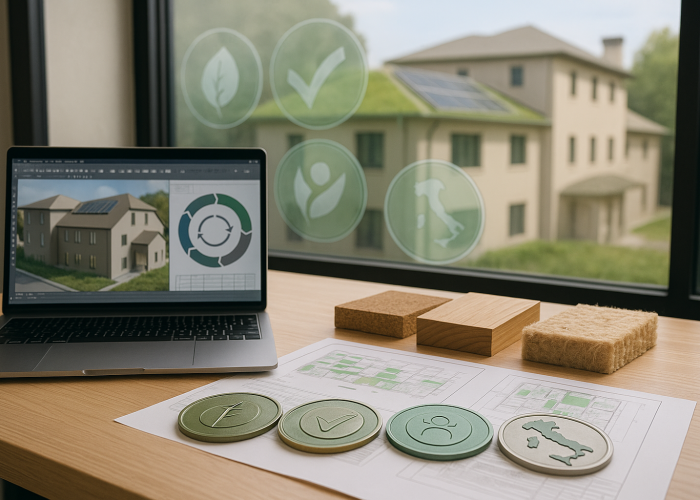
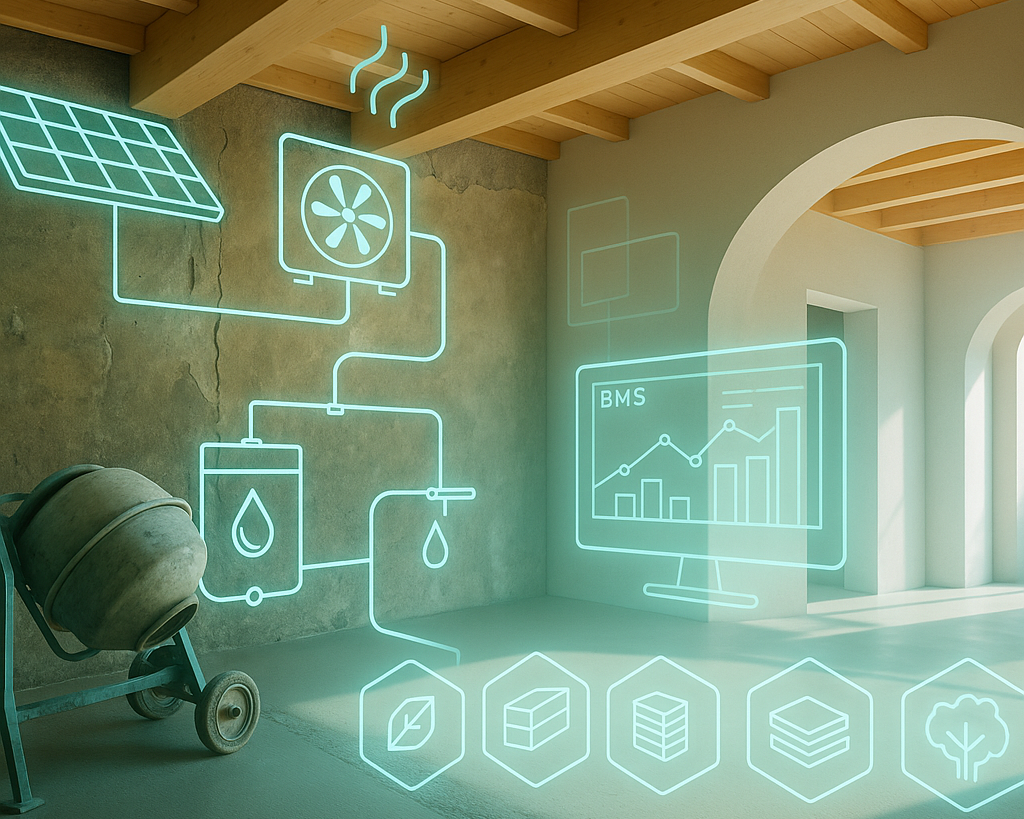
ChatGPT Image 3 ott 2025, 17_40_50

Key Principles of Eco-Sustainable Solutions

Eco-sustainable solutions in construction are based on several fundamental technical principles:

  1. Reduction of environmental impact throughout the entire building life cycle (Life Cycle Assessment – LCA).
  2. Energy efficiency through passive and active technologies.
  3. Responsible use of natural resources, favoring renewable, recycled, and recyclable materials.
  4. Sustainable water management, through recovery, reuse, and waste reduction.
  5. Improvement of indoor environmental quality, ensuring thermal, acoustic, and visual comfort.
  6. Resilience to climate change, with solutions that enhance buildings’ ability to withstand extreme events.

Technical Solutions for Eco-Sustainable Buildings

1. Energy efficiency and passive systems

Reducing energy demand is the first step towards sustainability. This is achieved through:

  • High-performance envelope: thermal insulation with natural or recycled materials (wood fiber, hemp, cork, sheep wool, cellulose panels).
  • Ventilated facades and dynamic shading systems that reduce summer thermal load.
  • Orientation and bioclimatic design: exploiting solar radiation in winter and shading in summer.
  • High-efficiency windows with triple glazing and thermal break frames.

The use of renewable sources is essential to achieve carbon neutrality:

  • Photovoltaic systems integrated into roofs and facades (BIPV – Building Integrated Photovoltaics).
  • Solar thermal systems for domestic hot water production.
  • Geothermal heat pumps for heating and cooling.
  • Micro-cogeneration and trigeneration to maximize primary energy use.

The water cycle in buildings can be optimized through:

  • Rainwater harvesting systems for non-potable uses.
  • Dual plumbing systems for the separation and reuse of greywater.
  • Low-flow faucets and fixtures to reduce water consumption.
  • Green roofs and phytoremediation gardens that contribute to improved water management and air quality.

The choice of materials plays a central role:

  • FSC or PEFC certified wood, sourced from sustainably managed forests.
  • Low-clinker concrete, with the addition of fly ash or natural pozzolans.
  • Recycled steel and materials from circular supply chains.
  • Low VOC emissions interior finishes (volatile organic compounds), to improve indoor air quality.

The integration of digital systems allows for constant monitoring of environmental performance:
  • Building Management Systems (BMS) for integrated facility management.
  • IoT sensors for real-time monitoring of energy and water consumption.
  • Home automation to optimize lighting, climate control, and security.

Certifications and Reference Standards

Eco-sustainable solutions in construction are often verified and enhanced through internationally recognized certifications, including:

  • LEED (Leadership in Energy and Environmental Design);
  • BREEAM (Building Research Establishment Environmental Assessment Method);
  • WELL Building Standard, focused on occupant well-being;
  • ITACA Protocol, widely used in Italy for assessing building sustainability.

These tools provide objective criteria to measure environmental quality and stimulate continuous improvement.

Integrated, Interdisciplinary, and Sustainable Approach

Eco-sustainable solutions require an integrated and interdisciplinary approach. Architects, engineers, urban planners, economists, and environmental experts must collaborate from the early design stages, in a process that simultaneously considers technical feasibility, economic sustainability, and social impacts.

Tools such as Building Information Modeling (BIM) and Life Cycle Costing (LCC) methodologies allow for the integration of energy, economic, and environmental assessments, ensuring that design choices are consistent throughout the entire building life cycle.

The adoption of sustainable strategies in construction generates tangible and measurable benefits:
  1. Reduction of energy consumption by up to 70% compared to traditional buildings.
  2. Decrease in CO₂ emissions, contributing to decarbonization goals.
  3. Improvement of living comfort, with healthier, brighter, and acoustically efficient environments.
  4. Enhancement of real estate value, due to increased market appeal.
  5. Climate resilience, with buildings better suited to withstand extreme events.
  6. Reduction of management and maintenance costs in the medium to long term.

Eco-sustainable solutions are no longer an optional choice but an essential requirement for present and future construction. They represent the convergence of technological innovation, environmental responsibility, and economic necessity, contributing to transforming the construction sector into a driver for ecological transition.

An integrated approach, based on efficient technologies, low-impact materials, and intelligent management systems, significantly reduces the environmental footprint of buildings while improving user well-being and urban resilience.

Ultimately, investing in eco-sustainable solutions means building structures capable of lasting over time, respecting the environment, and generating shared value for the community.

Segui i nostri profili social
Privacy Overview

This website uses cookies so that we can provide you with the best user experience possible. Cookie information is stored in your browser and performs functions such as recognising you when you return to our website and helping our team to understand which sections of the website you find most interesting and useful.