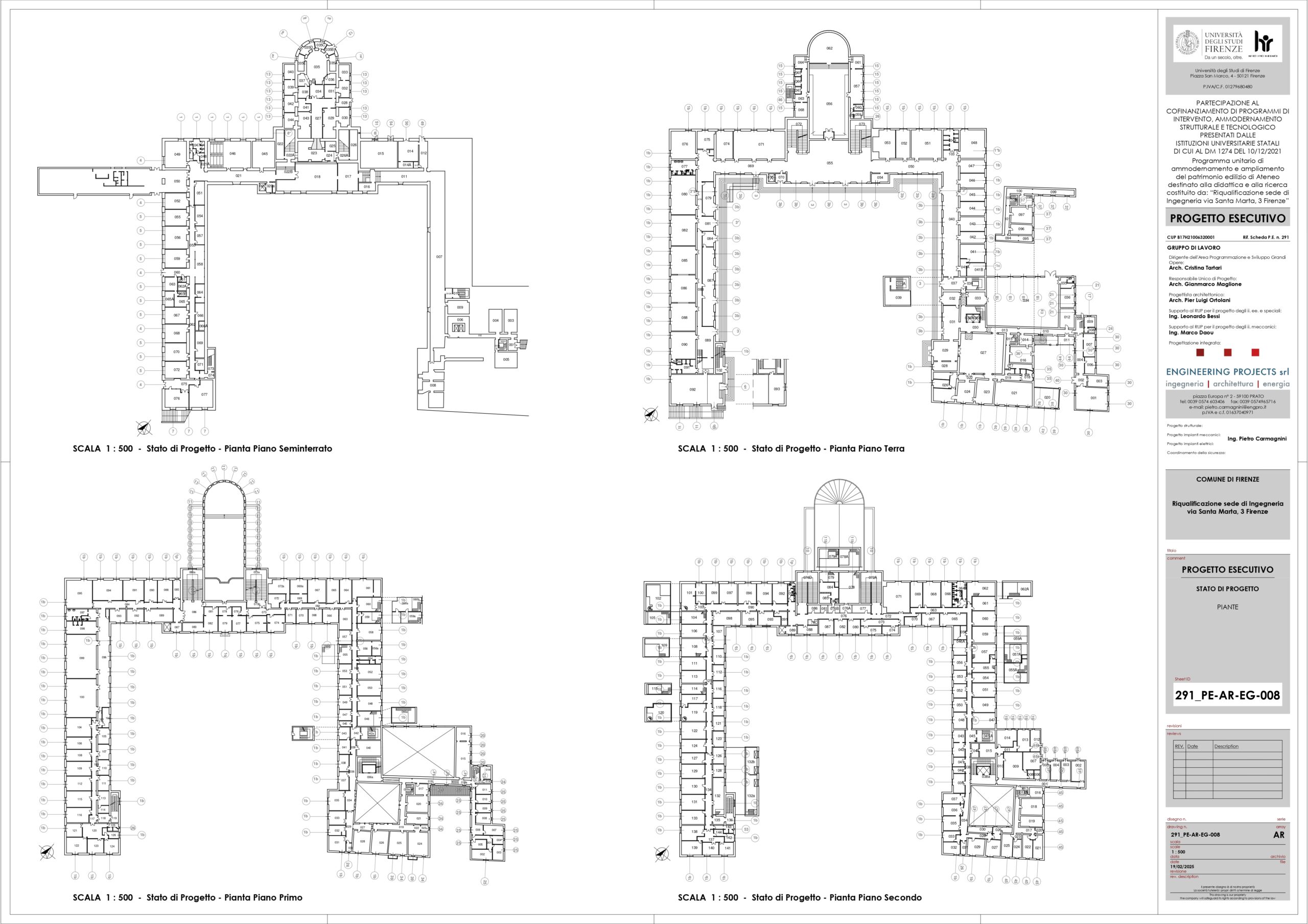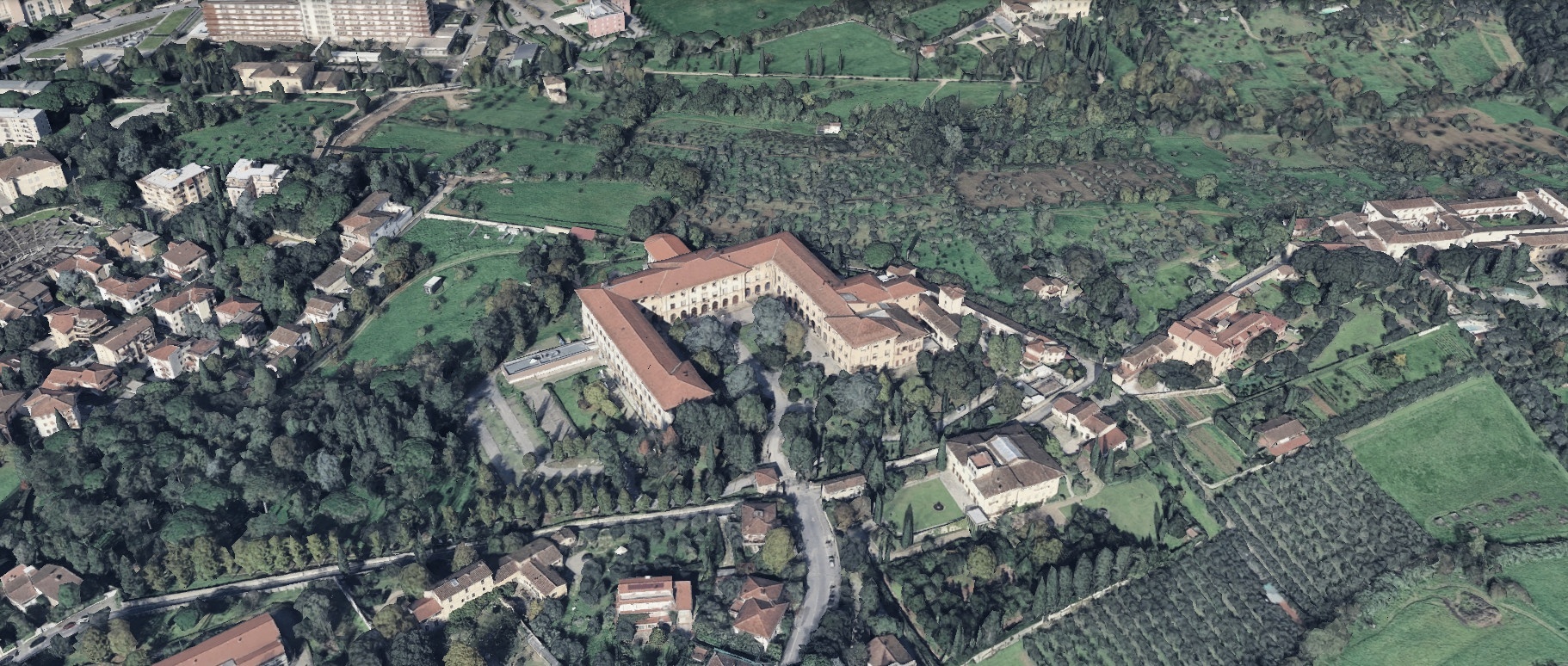

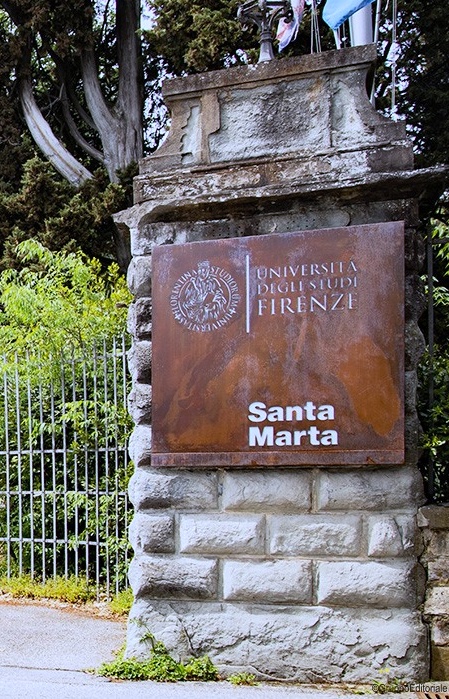
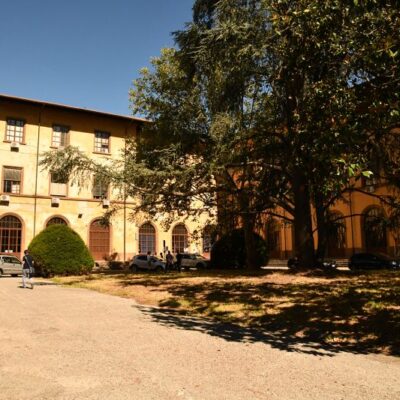
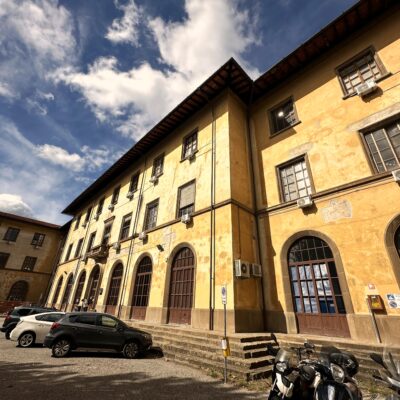
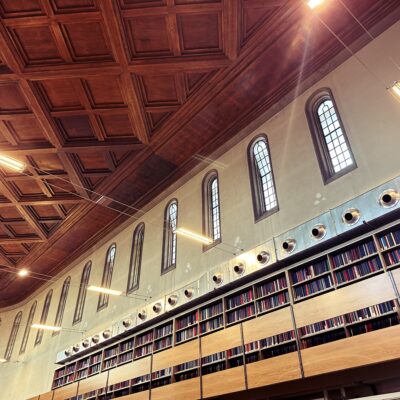
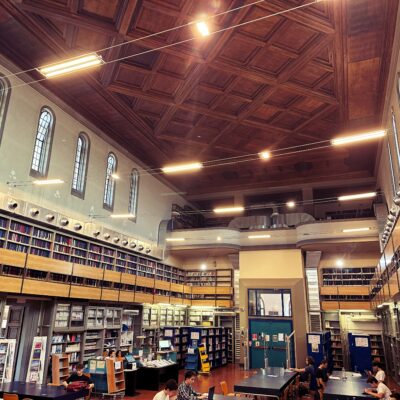
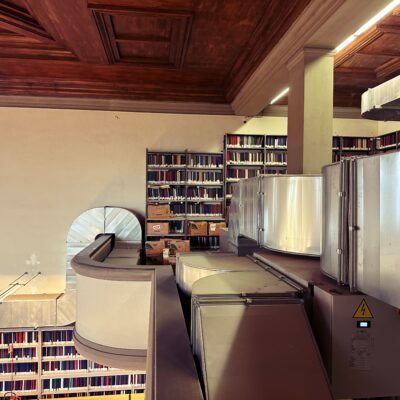
Villa Cristina, a prestigious building dating back to the 14th-15th century located on via Santa Marta in Florence, represents a historical and architectural asset of extraordinary value. Over time, it has served various functions: expanded in 1938 to host the Seminary of the Florentine Archdiocese and became the headquarters of the Faculty of Engineering of the University of Florence in 1973. Today, it is protected under Legislative Decree 42/2004 as a cultural and landscape asset.
Project Objectives
The project, co-financed by the Ministry of University and Research as per D.M. 1274 of 12/10/2021 within the framework of “Intervention, structural and technological modernization programs presented by state university institutions”, aims to redevelop the Santa Marta complex.
Specifically, the intent is to restore the building to its original identity, enhancing its historical features and improving its performance in a contemporary context.
Architectural interventions
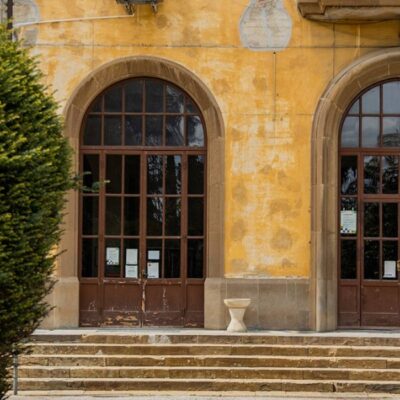
- Facade restoration: the building, currently affected by superficial and deep degradation phenomena, has undergone a thorough material analysis and degradation mapping. The planned operations include cleaning, consolidation, and reintegration of stone and plaster surfaces, using techniques and materials consistent with the originals.
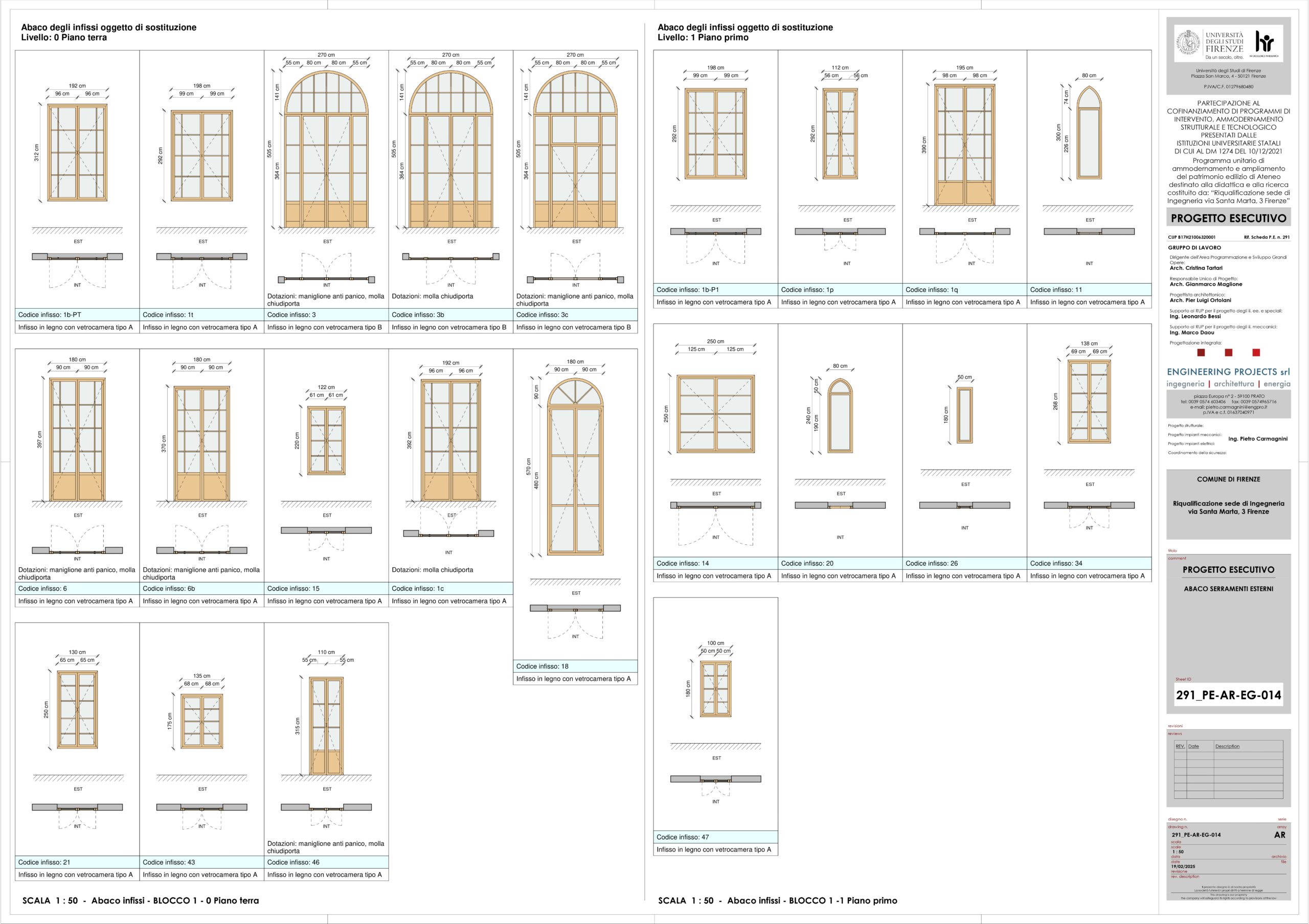
- Window renewal: the replacement of almost all existing windows with new high-performance thermo-acoustic frames is planned, equipped with double glazing and advanced sealing systems, in compliance with current technical regulations on energy efficiency and living comfort.
Structural interventions
From a structural perspective, the project involves the analysis, design, and verification of a reinforced concrete foundation slab and the perimeter walls against the ground, as well as the design and verification of the perimeter barrier intended to protect the refrigeration plant.
The slab will serve to support the refrigeration machines planned for the summer air conditioning system, ensuring the necessary rigidity and load-bearing capacity.
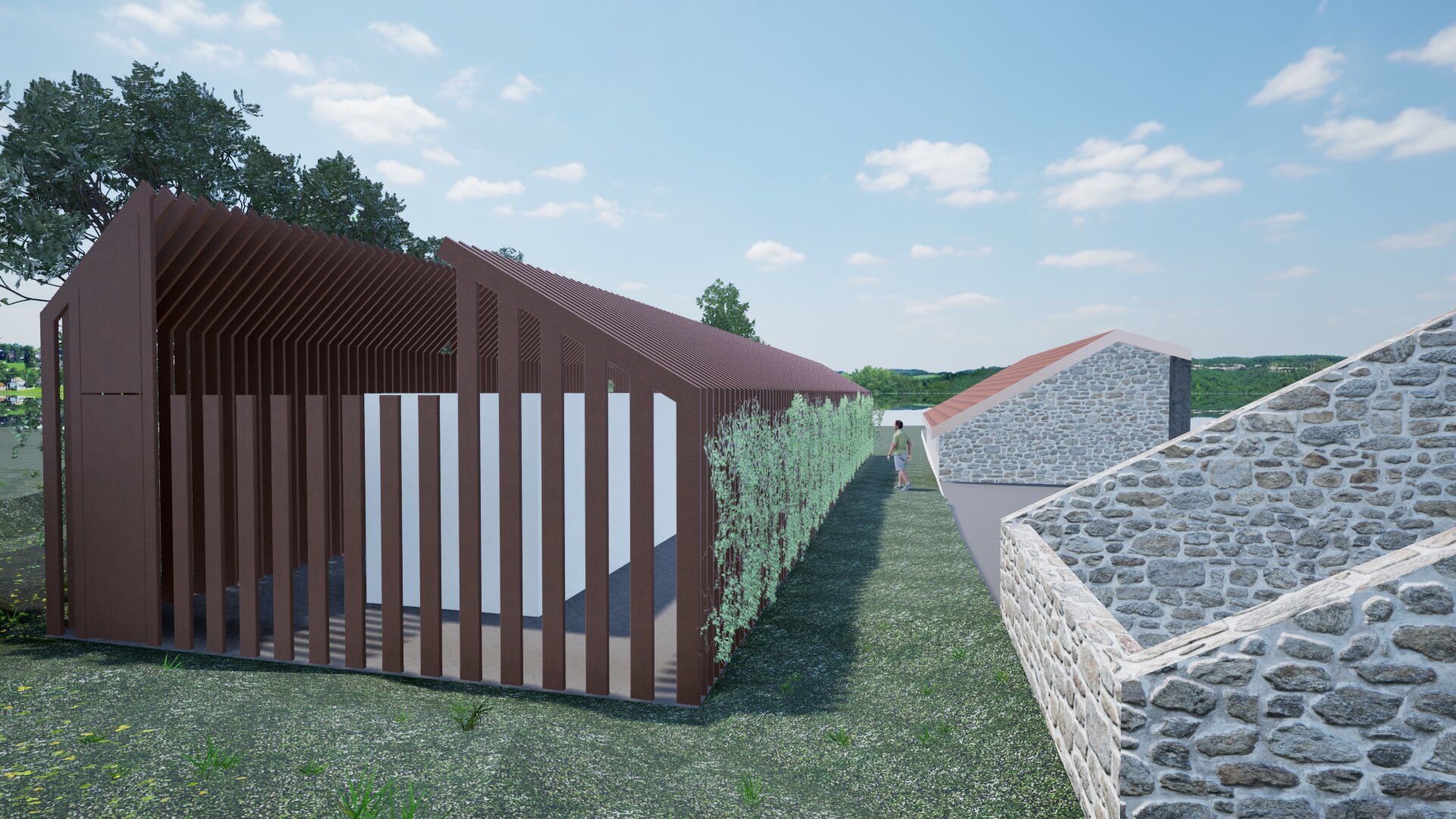
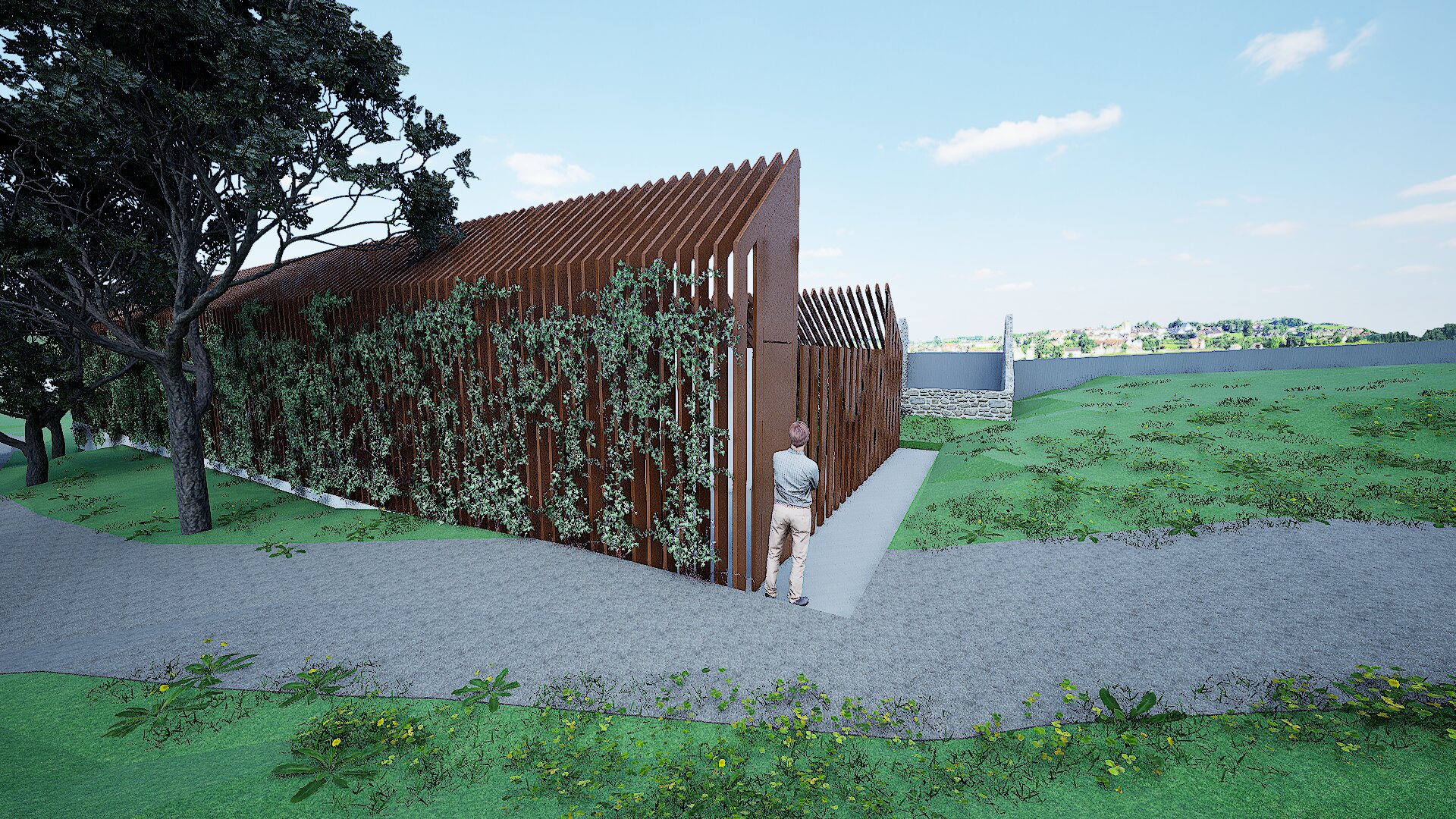
The perimeter barrier, designed in corten steel S355, serves a triple function: acoustic shielding, visual mitigation, and physical protection of the plant equipment.
The project has been developed with particular attention to the absence of interference with existing load-bearing structures, ensuring the full structural integrity of the university building and the reversibility of the works over time.
Plant interventions
The construction of a refrigeration plant will allow the decommissioning of the numerous existing split units, whose external units negatively impact the architectural appearance of the facades.
The removal of these elements will therefore lead to both aesthetic and energy improvements, reducing overall consumption and simplifying plant management.
The project includes the installation of three reversible air-water heat pump units of 600 kW each, intended to serve the entire building complex to ensure high performance, seasonal efficiency, and reduced noise levels in compliance with current sustainability and energy containment regulations.

In parallel, a study for the expansion of the electrical distribution networks has been developed, aimed at powering the new refrigeration units and the associated supply and return pumps.