

The Poor Clare's theater/auditorium is reborn!
The construction phases are progressing, and the expected outcome is what we present in this brief overview.
The designed structure will predominantly have multipurpose features and will be able to host theatrical performances, concerts, congresses, and conferences. It adopts more qualifying solutions in relation to the importance of the location and is suitable for new regulatory requirements, especially regarding safety in public venues used for theatrical performances and similar events.
The interventions (architectural, plant, structural, and safety measures) mainly involve the following internal areas: atrium, stalls, gallery, box, bar, distribution and connection spaces, as well as accessory rooms, dressing rooms, and stage.

Contemporaneity
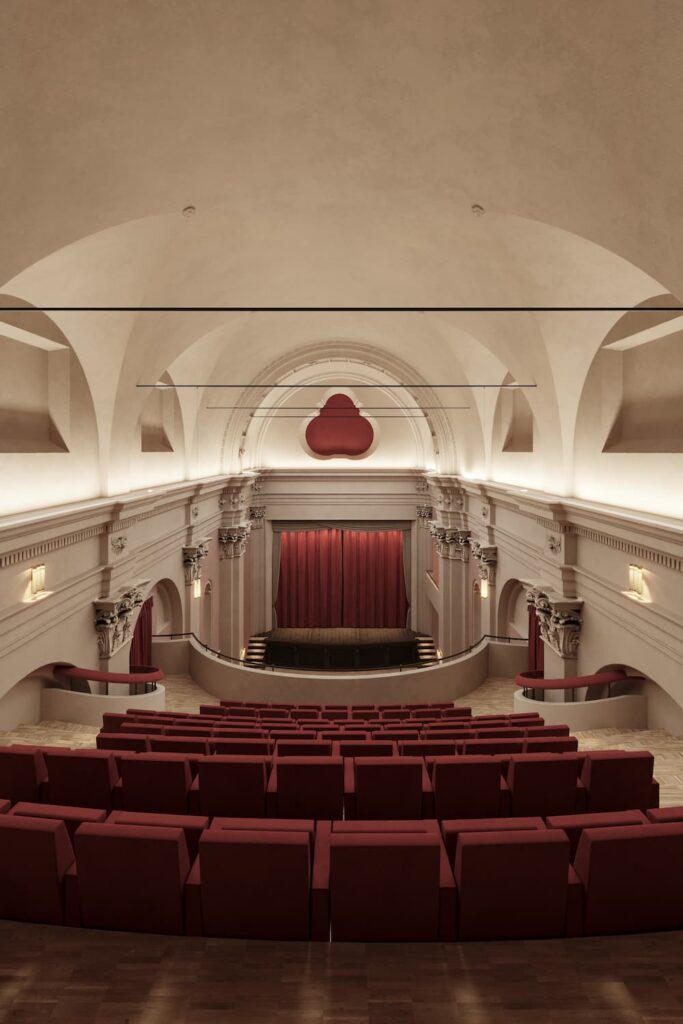
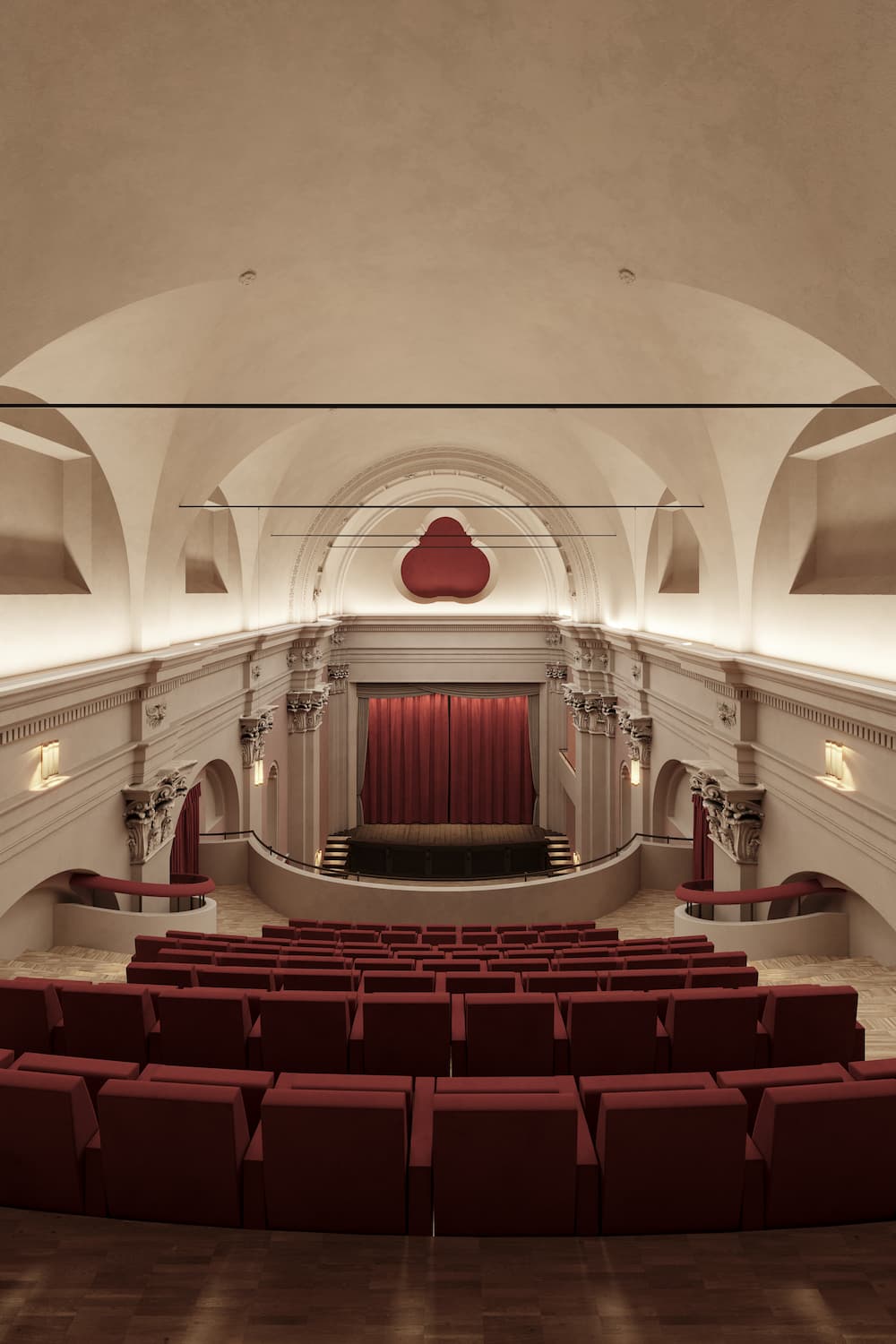
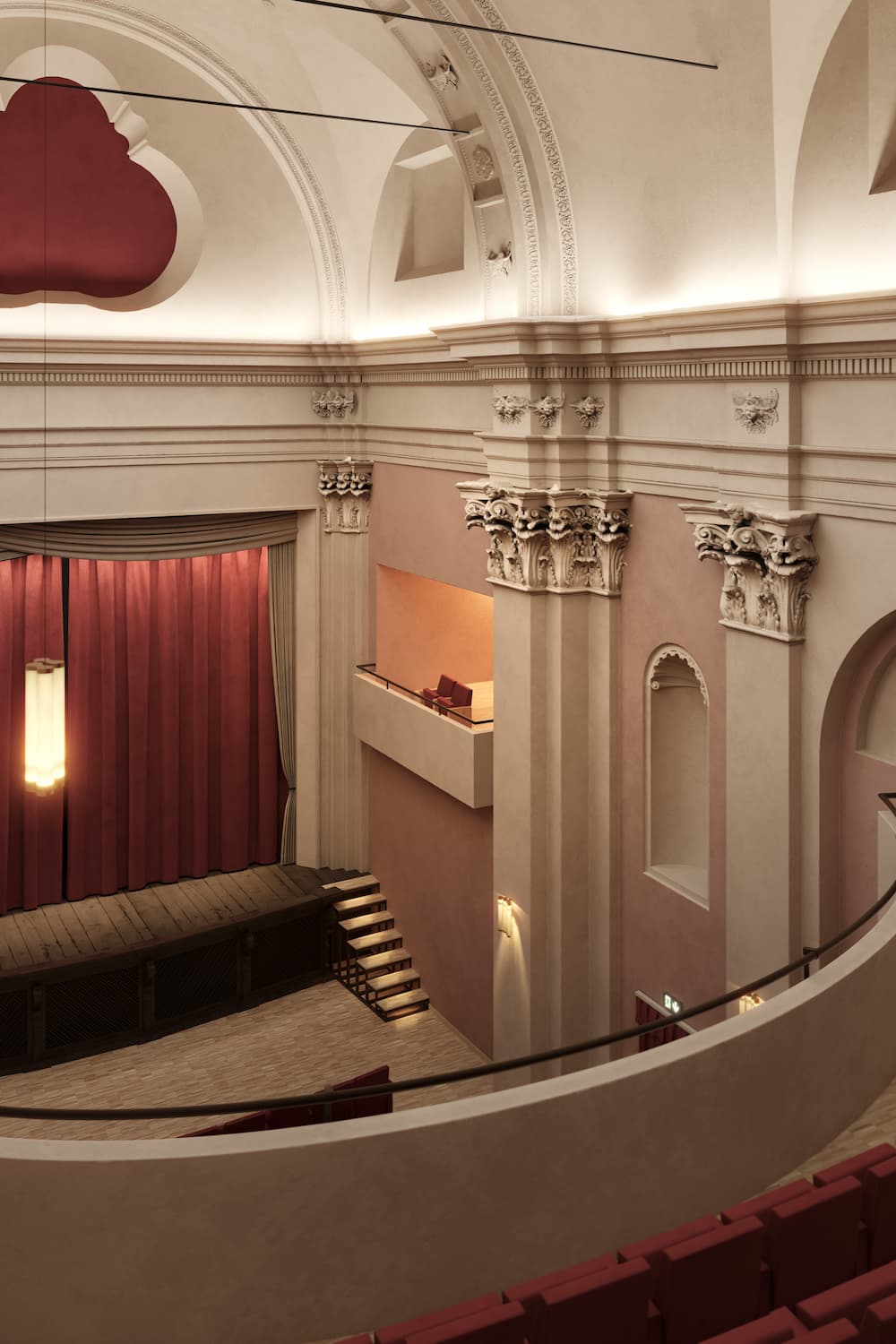
The image that will emerge aims to combine the 17th-century structure, originally built as the Church of the Clarisse monastic complex, with contemporary elements.
The stalls have been renewed, with the carpet replaced by new wooden flooring.
The existing seats are replaced to meet acoustic absorption needs, fire safety characteristics, and for a more contemporary image that contrasts well with the 17th-century structure.
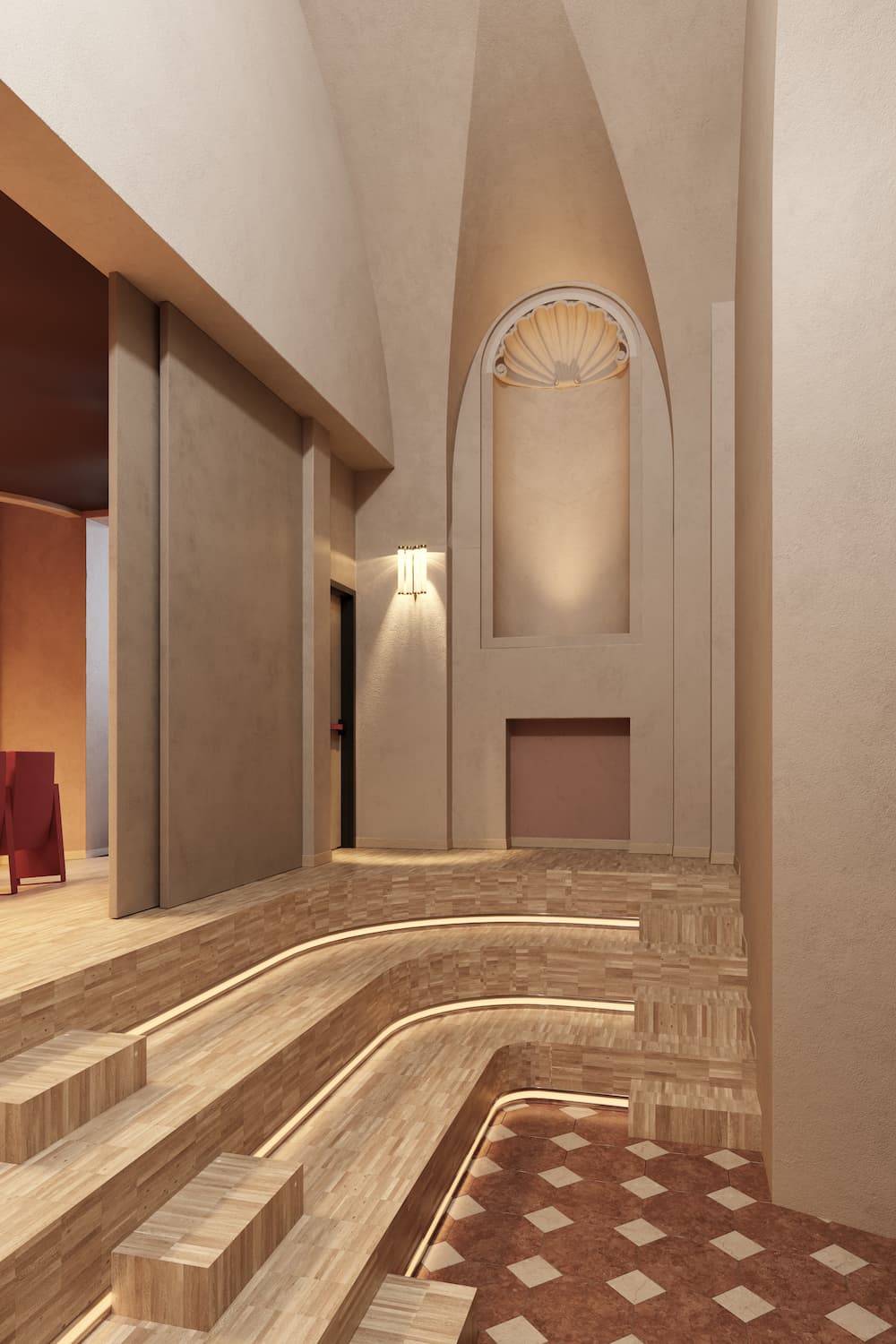
The control booth is replaced by a state-of-the-art digital console positioned on the last step of the gallery, allowing for the creation of a new space serving as a second foyer suitable for hosting small cultural events and readings.
Second Foyer
The second Foyer is characterized by a staircase made entirely of wood, of the same essence as the adjacent main hall; it will be separated by means of a wooden paneling with sliding elements that will allow it to be used either by creating a more intimate space or in continuity with the stalls, allowing it to recreate, by opening the main door of the building facade, an optical channel from the stage to the sea.
Curtains and Painting
The curtains and fabrics are replaced with acoustically efficient materials that comply with current fire safety regulations.
The paintwork will reflect the colors found during stratigraphic analyses conducted on the walls, bringing to light the building’s most ancient and historical features in perfect harmony with the contemporary furnishings and the modernity of the visible plant components.
The result, as can be seen from the rendered modeling, will be of great harmony with the context and the historic building, achieving new standards of quality, comfort, and safety, and providing a more contemporary appeal that greatly enhances the revival of this complex of great importance for the city of Rapallo and beyond.