In the construction sector, the increasing complexity of projects, the interdisciplinary nature of the skills involved, and the pressure to reduce time, costs, and environmental emissions make process optimization an essential goal. It is no longer just about making individual activities more efficient, but about reviewing the entire operational flow in an integrated perspective, leveraging the potential offered by digital engineering.
Thanks to digital design, advanced simulations, BIM systems, and emerging technologies such as augmented reality, digital twins, and artificial intelligence, it is now possible to model, analyze, and optimize construction processes at every stage of the lifecycle: from preliminary design to post-delivery management of the work. This systemic approach ensures risk reduction, quality improvement, and more sustainable resource management.
Optimization requires the definition of clear metrics to measure progress:
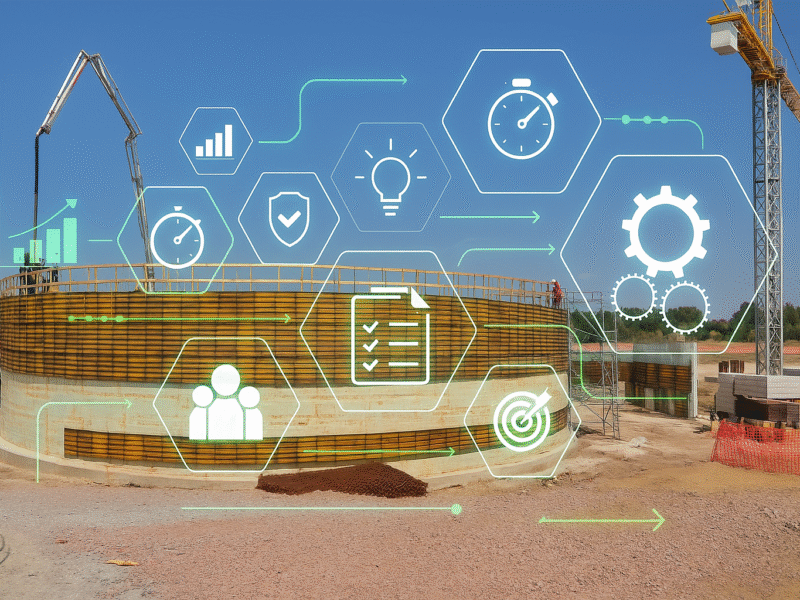
Process optimization in construction, enabled by digital engineering, represents a strategic lever to address the challenges of project complexity, sustainability, and market competitiveness. Through the integration of advanced tools such as BIM, digital twins, CAM simulations, artificial intelligence, and immersive reality, it is possible to radically transform the way construction works are conceived and executed.
This approach allows not only to reduce time and costs but also to improve the quality and resilience of constructions, ensuring added value for clients, operators, and the community.
Ultimately, process optimization is no longer an option but an essential necessity to build more efficiently, safely, and sustainably, steering construction towards a digital and responsible future.