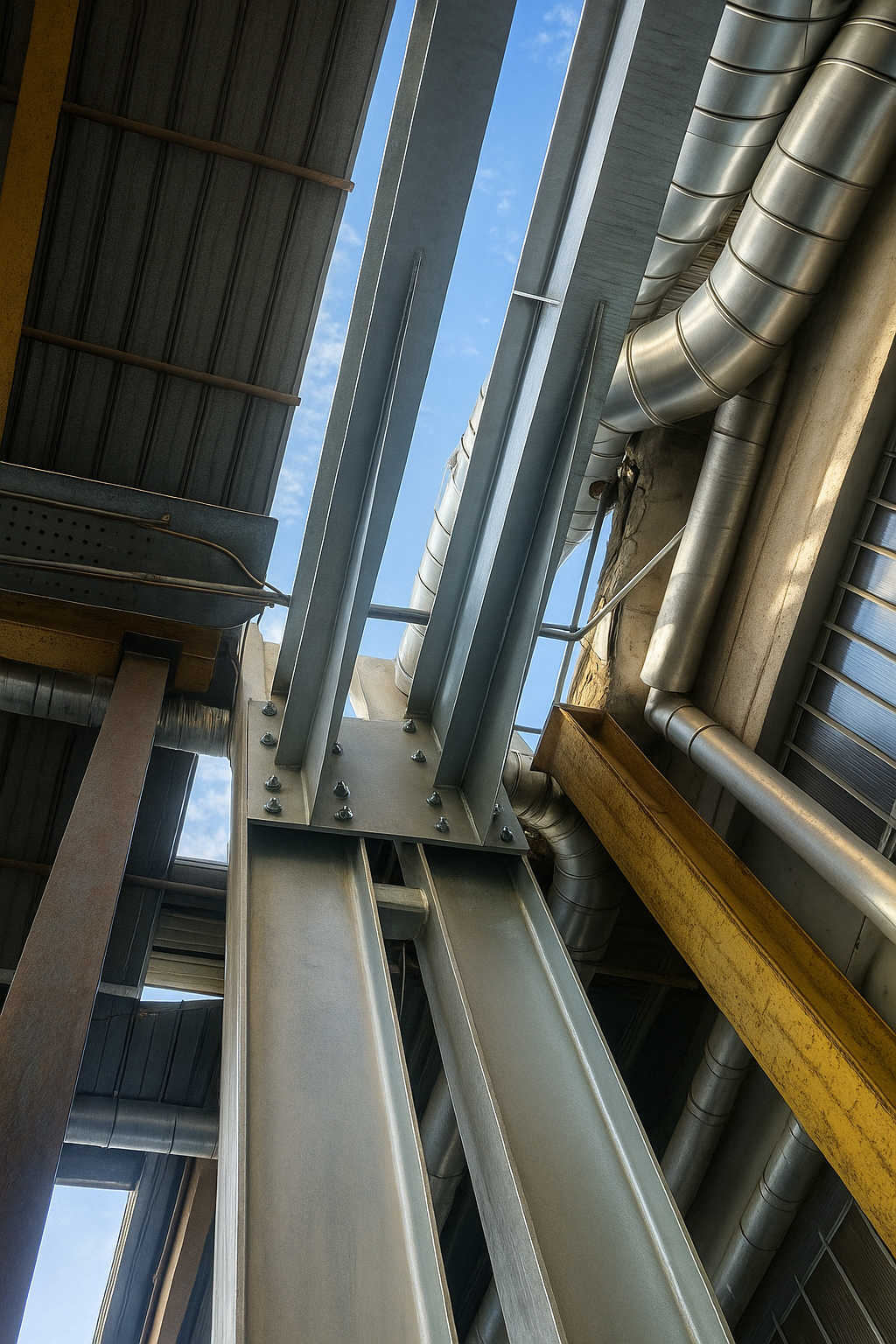
Sequence of activities

Coordinate timing, resources, and processes for safety, efficiency, integration

In the construction sector, characterized by high technical and organizational complexity, the sequence of activities is a crucial element to ensure that the project is carried out efficiently, safely, and in compliance with technical specifications. Precisely defining and planning the order of operations and phases allows for reducing interference risks, optimizing time and resources, and ensuring the quality of the final product.

In detailed executive design, the sequence of activities becomes a strategic operational tool: it translates the executive project into a clear and structured roadmap, capable of guiding companies, technicians, and workers throughout the entire construction process. Accurate planning not only defines a timeline but also integrates technological, logistical, plant, and safety aspects, creating a coherent and multidisciplinary framework.
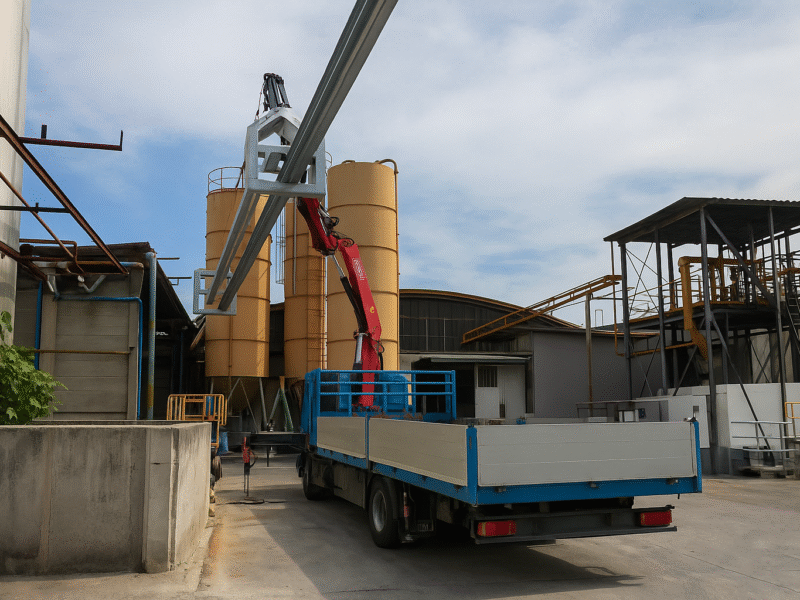
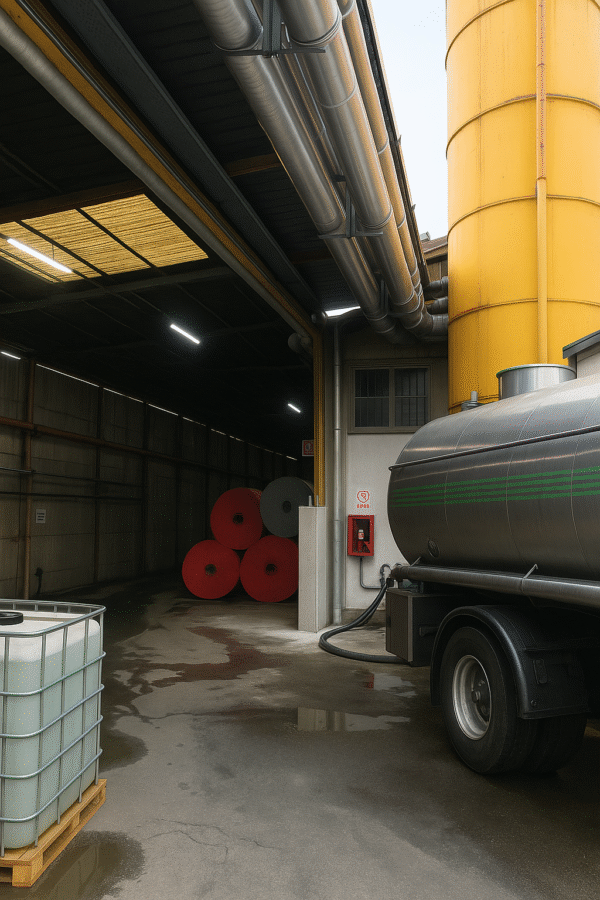
Fundamental principles of the sequence of activities

  1. Operational logic
    • Activities must be ordered to respect technical dependencies (e.g., pouring structures before internal partitions).
    • Each phase must create the necessary conditions for the next, avoiding unproductive overlaps.
  2. Interdisciplinary coordination
    • The work of architecture, structures, and systems must be integrated into a coherent flow.
    • Coordination reduces interferences and ensures compatibility between different disciplines.
  3. Optimization of time
    • Use of project management tools to reduce downtime and maximize productivity.
    • Application of methodologies such as CPM (Critical Path Method) and PERT (Program Evaluation and Review Technique).
  4. Safety and sustainability
    • Planning activities to reduce risks for workers and minimize environmental impact.
    • Sequences that consider site logistics and waste reduction.

Structuring operational sequences

1. Preliminary analysis
  • Collection of technical specifications and client requirements.
  • Definition of performance, economic, and temporal objectives.
  • Division of the project into manageable work packages.
  • Identification of elementary activities and their relationships.
  • Logical sequencing between activities: finish-to-start, start-to-start, finish-to-finish.
  • Use of Gantt charts and CPM networks to visualize the dependency network.
  • Assignment of human, material, and technological resources to each activity.
  • Analysis of production capacity and logistical availability.
  • Identification of the critical path (activities that determine the minimum project duration).
  • Time reduction through fast tracking (controlled overlap of activities) or crashing (increase of resources).
  • Constant verification of work progress against the planned sequence.
  • Dynamic updating in case of design changes or unforeseen events.

Support Technologies

  • BIM 4D: three-dimensional models associated with the time factor to visually simulate the sequence of activities.
  • Project management software: Primavera P6, MS Project, Synchro for detailed scheduling and delay analysis.
  • Digital Twin: real-time updated digital twin to verify the impact of changes on the planned sequence.
  • Augmented reality: on-site visualization of the planned sequence and comparison with the actual state.

Benefits of a well-planned sequence

1. Reduction of conflicts
  • Elimination of overlaps between incompatible works.
  • Decrease in variations and rework.
  • Greater accuracy in economic estimates thanks to the correlation between time and resources.
  • Reduction of penalties due to delays.
  • Better organization of activities leads to greater compliance with specifications.
  • Reduction of non-conformities during testing.
  • Sequences that avoid risky co-presences in confined spaces.
  • Planning activities according to the safety plan.
  • Optimized sequences reduce material and energy waste.
  • Greater logistical efficiency and reduction of the environmental impact of the site.

Challenges and issues

  • Uncertainty of real contexts: unforeseen events related to weather conditions, supplies, or geotechnical issues.
  • Interdisciplinarity: difficulty in coordinating different actors with often divergent priorities.
  • Continuous updating: rigid sequences may prove inadequate in the face of changes or technological innovations.
  • Resource management: imbalances between availability and needs can alter planning.

Integration with the construction cycle

The sequence of activities is not a static document but accompanies the work through all phases:
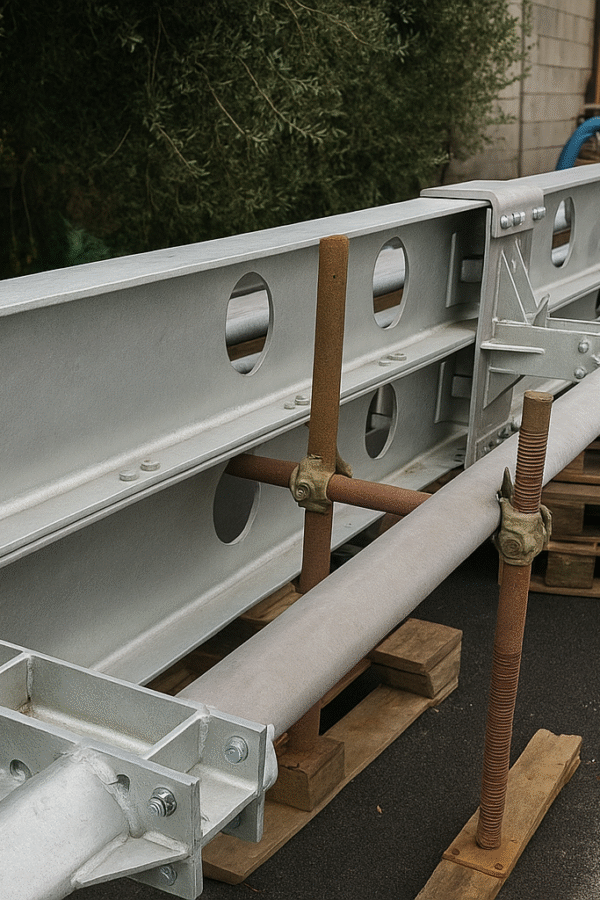
  • Design: preliminary definition of time and resources.
  • Execution: practical guide for workers and contractors.
  • Control: basis for monitoring progress and reporting to the client.
  • Post-construction management: analysis of collected data to improve methodologies in future projects.

The sequence of activities is an essential tool for translating the executive project into construction reality. Accurate planning supported by digital technologies allows for optimizing time, costs, and resources, reducing risks, and ensuring the final quality of the work.

In detailed executive design, the definition of the sequence becomes an integral part of the design itself: it not only organizes activities but also constitutes a multidisciplinary coordination element that helps transform a set of technical drawings into a concrete, efficient, and sustainable construction process.

Segui i nostri profili social
Privacy Overview

This website uses cookies so that we can provide you with the best user experience possible. Cookie information is stored in your browser and performs functions such as recognising you when you return to our website and helping our team to understand which sections of the website you find most interesting and useful.