Control of security conditions

From detail to construction site: safety as a culture of doing well

The control of safety conditions is one of the most significant activities in managing a construction project. Safety on construction sites is not just a regulatory obligation but a strategic element that directly impacts the quality, efficiency, and sustainability of the construction process. In the context of detailed executive design, this control takes on a particular significance: it is not just about applying basic rules, but it translates into a structured system of prevention, monitoring, and continuous improvement, capable of integrating technical, organizational, and technological aspects.

In the absence of systematic control, the risk of accidents, injuries, or operational interruptions increases significantly, with consequences both on a human and economic level. Conversely, careful planning of safety conditions, combined with constant monitoring, ensures the protection of workers, risk reduction, and regulatory compliance, contributing to the overall success of the project.
Fundamentals of safety control

  1. Prevention
    • Preliminary identification of risks through dedicated analyses (DVR – Risk Assessment Document, PSC – Safety and Coordination Plan).
    • Adoption of preventive measures to reduce the likelihood and severity of hazardous events.
  2. Operational monitoring
    • Constant control of site conditions through periodic inspections.
    • Verification of the correct use of personal (PPE) and collective (CPE) protective equipment.
  3. Regulatory Compliance
    • Application of the provisions of Legislative Decree 81/2008 and subsequent amendments.
    • Compliance with UNI, EN, and ISO standards related to the safety of processes and equipment.
  4. Training and awareness
    • Continuous training of workers on safety procedures and protocols.
    • Creation of a shared culture of prevention.

Operational control activities

1. Preliminary risk analysis
  • Identification of hazards related to each phase of the construction site.
  • Classification of risks according to probability, exposure, and consequence parameters.
  • Development of an integrated prevention plan.
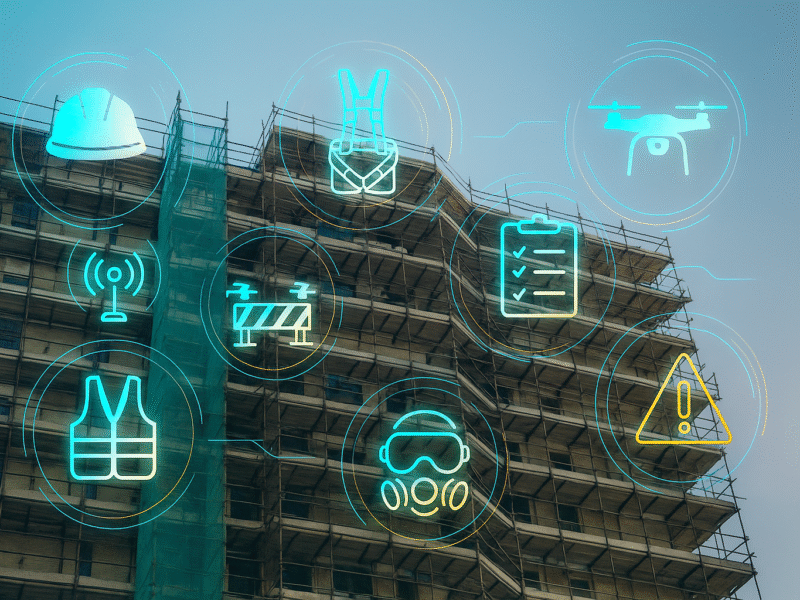
  • PPE: helmets, gloves, goggles, fall protection devices.
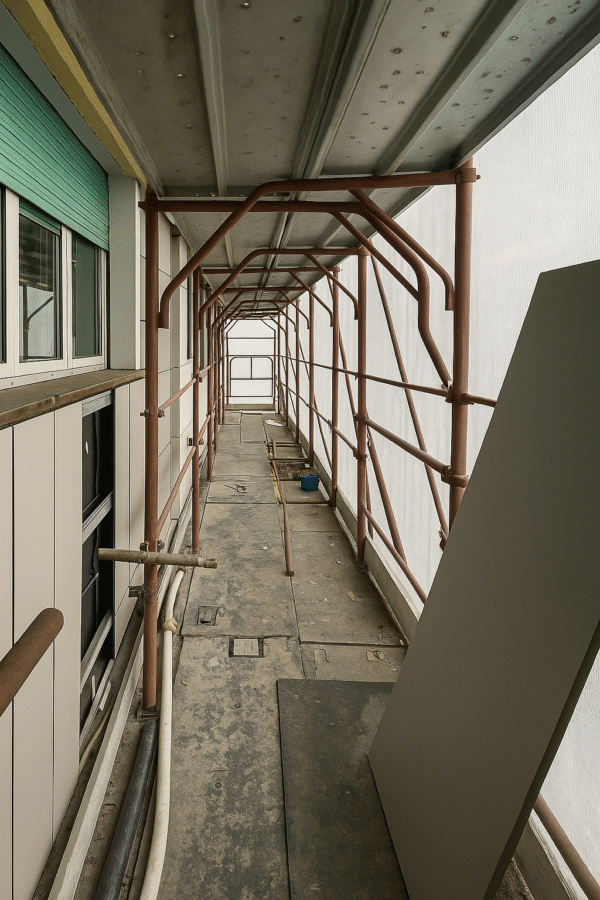
  • CPE: guardrails, safety nets, safety signage.
  • Ventilation and gas detection systems in confined spaces.
  • Daily checks on compliance with procedures.
  • Periodic audits to assess the effectiveness of prevention measures.
  • Preparation of safety reports and records.
  • Preparation of evacuation plans and emergency procedures.
  • Periodic emergency simulations to train personnel.
  • Coordination with external entities (fire brigade, emergency services).
  • Use of BIM 4D and 5D platforms to analyze interferences and risks related to operational sequences.
  • Application of IoT sensors to detect environmental parameters (noise, dust, vibrations, gases).
  • Geolocation systems to monitor movements and presence in risk areas.

Technologies supporting control

  • Drones: rapid and safe inspections in hard-to-reach areas.
  • Laser scanners: three-dimensional surveys to verify stability and safety conditions.
  • Wearable devices: wearable devices that monitor vital parameters and signal dangerous situations.
  • Digital safety management platforms: centralization of information and real-time alert generation.

Benefits of effective control

1. Reduction of accidents
  • Lower frequency and severity of injuries.
  • Better protection of workers and reduction of lost days.
  • Fewer interruptions due to emergencies or accidents.
  • Improvement of overall site productivity.
  • Reduction of the risk of penalties and legal disputes.
  • Greater credibility and reliability with stakeholders.
  • Safer sites reduce the environmental impact associated with accidents or resource waste.
  • Improvement of working conditions as a social value.
  • Higher perceived quality and positive reputation for the completed work.

Challenges and issues

  • Cultural resistance: difficulty in embedding the culture of safety at all organizational levels.
  • Regulatory complexity: continuous updates of provisions make compliance difficult.
  • Initial costs: investments in advanced safety systems may seem burdensome.
  • Supply chain management: complicated coordination between contractors, subcontractors, and suppliers.

Integration with the construction cycle

The control of safety conditions must be planned and implemented at every stage of the project:
  • Design: preliminary risk assessment and preparation of necessary measures.
  • Construction: daily monitoring and adaptation of procedures to actual operating conditions.
  • Testing: verification of the compliance of temporary and permanent works in terms of safety.
  • Post-operation management: transfer of information to ensure safety during operation and maintenance.

The control of safety conditions is not an accessory activity, but an essential component of detailed executive design and site management. Through preventive analyses, constant monitoring, and the use of advanced technologies, it is possible to ensure a safe, efficient, and sustainable work environment.

Ultimately, investing in safety means investing in the quality of the project, the protection of people, and the sustainability of the construction sector, contributing to transforming construction sites into places not only of production but also of responsibility and innovation.

Segui i nostri profili social
Privacy Overview

This website uses cookies so that we can provide you with the best user experience possible. Cookie information is stored in your browser and performs functions such as recognising you when you return to our website and helping our team to understand which sections of the website you find most interesting and useful.