
Every construction project, regardless of its scale or function, cannot be conceived as an isolated entity. It is always situated within a physical, regulatory, social, economic, and environmental context that influences its possibilities, implementation methods, and long-term outcomes. The contextualization of the project is therefore a fundamental phase in decision-making and design processes, as it allows abstract objectives to be translated into coherent, sustainable, and functional solutions in relation to the specific context.
It is not just a preliminary analysis, but a methodological approach that accompanies the entire life cycle of the work: from the initial conception to the implementation phase, up to management and maintenance. Contextualization allows for anticipating critical issues, reducing risks, and ensuring that design choices are not only technically valid but also integrated with the surrounding environment and the needs of stakeholders.
Contextualization in the construction field must be approached in a multidimensional manner, considering aspects that interact with each other in a complex way:
Every project must comply with a complex framework of rules and regulations:
Aspects related to the territory and environment are decisive:
A construction project influences and is influenced by the community in which it is located:
The project must take into account the available technological solutions and their compatibility with local needs:


Project contextualization is based on specific analytical and methodological tools:
A structured contextualization process generates significant benefits:

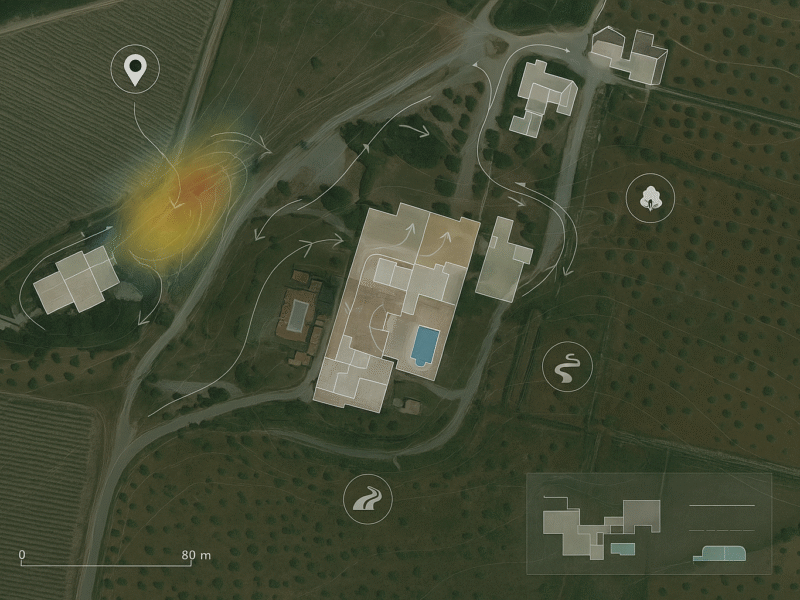
Project contextualization in construction represents a crucial phase that goes beyond simple preliminary analysis: it is a methodological approach that integrates regulatory, environmental, social, technological, and economic variables into a coherent and shared framework involving designers, engineers, urban planners, economists, environmental experts, and local stakeholders.
Thanks to advanced tools like BIM, GIS, and multi-criteria analysis, it is possible to manage complexity and transform contextual constraints into opportunities for innovation and enhancement.
Ultimately, contextualizing a project means designing buildings and infrastructure capable of responding to the specific needs of the place and time in which they arise, ensuring sustainability, efficiency, and lasting value for the community.